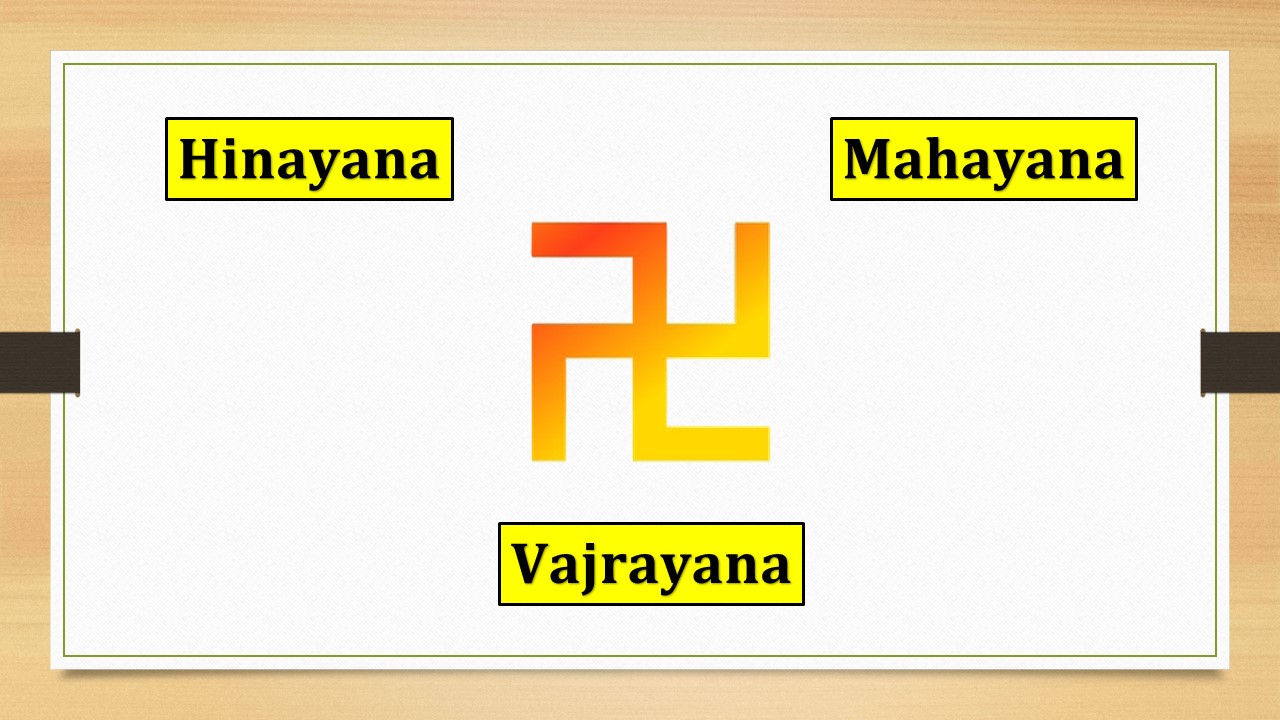
What are the 3 Vehicles?
In Buddhism, a “vehicle” (yana) means a path or method that carries beings toward liberation. The 3 Vehicles are:
- Hinayana (Small Vehicle)
- Mahayana (Great Vehicle)
- Vajrayana (Diamond Vehicle)
.
Hinayana (Small Vehicle)
Meaning
- “Hina” = smaller
- Focuses on personal liberation from suffering
Goal: Become an Arhat (one who ends rebirth)
Historical background
- Originated from the earliest Buddhist teachings
- Preserved mainly in Theravāda Buddhism
- Spread to Sri Lanka, Thailand, Myanmar, Cambodia
Core teachings
- Four Noble Truths
- Eightfold Path
- Impermanence (anicca)
- Suffering (dukkha)
- Non-self (anatta)
Practice emphasizes:
- Moral discipline
- Concentration (Meditation)
- Wisdom
Limitation (from Mahayana perspective)
- Focuses mainly on self-liberation
- Less emphasis on saving all beings
.
Mahayana (Great Vehicle)
Meaning
- “Maha” = great
- Seeks liberation for all beings
Goal: Become a Bodhisattva and then continue to cultivate until reaching Buddhahood
Historical background
- Emerged around 1st century BCE – 1st century CE
- Spread to China, Korea, Japan, Vietnam
Core teachings
- Bodhicitta (the vow to save all beings)
- Emptiness (Sunyata)
- Compassion + Wisdom
- Non-abiding / Non-attachment
Practice emphasizes:
- Generosity
- Endurance
- Diligence
- Moral discipline
- Concentration (Meditation)
- Wisdom
.
Vajrayana (Diamond Vehicle)
Meaning
- “Vajra” = indestructible
- Uses powerful methods to accelerate awakening
Goal: Attain Buddhahood in one lifetime
Historical background
- Developed from Mahayana around 6th–7th century CE
- Flourished in Tibet, Mongolia, Himalayan regions
- Includes Tibetan Buddhism and esoteric practices
Core teachings
- Mantras
- Mudras
- Visualizations
- Tantras
- Guru to disciple transmission
Strengths
- Very fast and powerful path
- Integrates body, speech, and mind
- Suitable for practitioners with strong discipline
Risks
- Requires a qualified teacher
- Wrong practice can cause harm
- Not suitable for everyone
.
If you want to read Hinayana Buddhism (Theravada Buddhism) scriptures – click this link
If you want to read Mahayana Buddhism scriptures – click this link
If you want to read Vajrayana Buddhism scriptures – click this link
.